
Biblical missionary commentary for the twelfth Sunday in ordinary time (year A: Jer 20:10-13; Ps 69; Rom 5:12-15; Mt 10:26-33) by Father Dinh Anh Nhue Nguyen, Secretary General of the Pontifical Missionary Union.
Courage and Wisdom in Witnessing to Christ
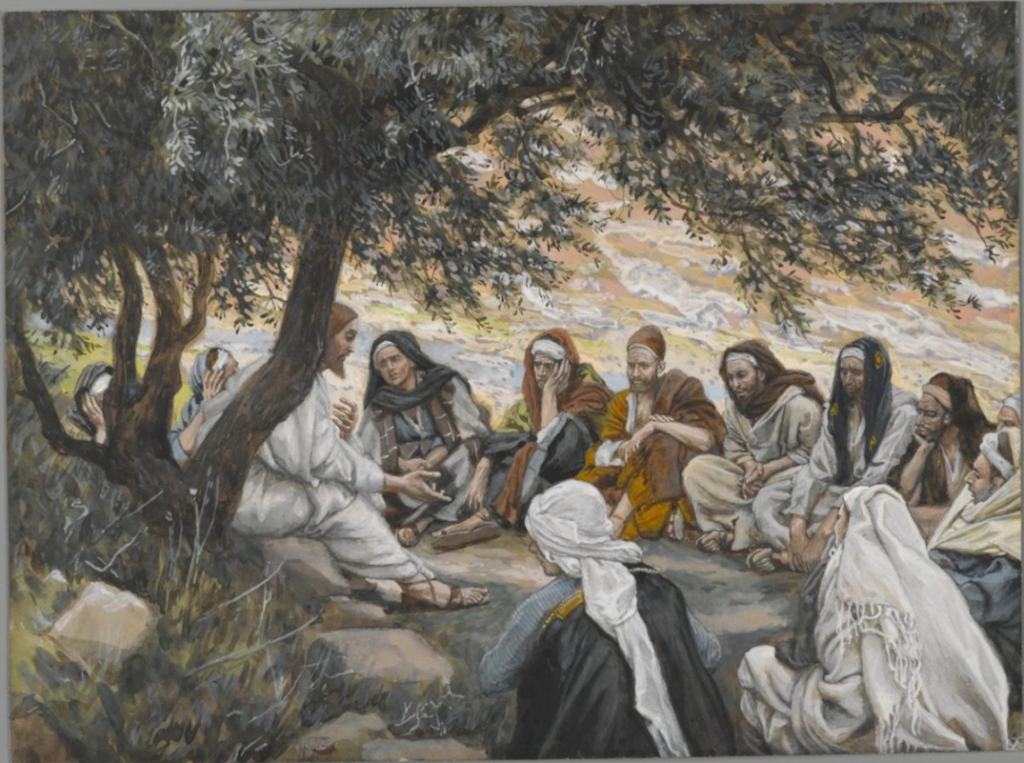
Today’s Gospel illustrates the continuation of the important instructions Jesus gave His disciples-apostles when He sent them out on mission (we heard the beginning of the discourse last Sunday). It is about the concrete exhortation not to be afraid to witness to Christ. The imperative “do not be afraid” is repeated no less than three times in a few sentences, at the beginning, in the middle and at the end; and so it punctuates the whole of Jesus’ brief discourse. The Master’s insistence on this attitude that the disciples-missionaries will have to assume, or perhaps better, will have to learn to have in their mission, emerges very clearly. From Jesus’ words we can glimpse three fundamental aspects of this not-having-fear, which are still relevant today.
1. “Do Not Be Afraid.” The Courage of Proclamation in Adversity
First of all, it is about the disciples not being afraid of men in proclaiming all that they had received from their Master: “What I say to you in the darkness, speak in the light; what you hear whispered, proclaim on the housetops.” It refers, then, to the divine revelations that Jesus confides to His disciples “in the secret” of their hearts. The disciples are called to be Christ’s “megaphone” in conveying His proclamation and teaching to the world in its entirety. It will be what the Risen One will exhort to His most faithful disciples before He ascends to Heaven: “Go, therefore, and make disciples of all nations, baptizing them…, teaching them to observe all that I have commanded you” (Mt 28:19).
2. Wisdom in Fearing Only God and Not Men
Secondly, the disciples’ attitude of not being afraid comes from a sapiential view of life with God and in God. Thus, on the one hand Jesus exhorts, “Do not be afraid of those who kill the body but cannot kill the soul.” That is, men are only men; they do not have absolute power over the soul. In contrast, “rather, be afraid of the one who can destroy both soul and body in Gehenna.” That is to say, be afraid only of God, the true and only Almighty.
Such teaching of Jesus on the fear of God echoes with that of the wise teachers in the biblical-Jewish tradition. It is emblematically emphasized Sir 1:6 [LXX 1:8]: “There is but one, wise and truly awesome, seated upon his throne—the Lord.” Moreover, God is the final instance and “puts to death and gives life, casts down to Sheol and brings up again” (1 Sm 2:6). Therefore, Jesus’ exhortation is a strong call for reflection: let those who are wise think about this in order to have the right attitude toward Him and Him alone, regardless of anything else or anyone else. Here we catch a glimpse of what biblical-Jewish wisdom repeatedly insists on: from contemplating God’s greatness and omnipotence to wisdom in life (cf. Ps 107:43a); indeed, it is precisely from the fear of the almighty God that right and wise behavior is arrived at, according to the aforementioned fundamental motto of the biblical-Jewish wisdom tradition: “Fear of the LORD is the beginning of wisdom” (cf. Pr 1:7; Ps 111:10).
3. True Fear That Goes Together With Trust in God
Finally, immediately after the exhortation to fear the One who is the only Almighty, Jesus offers a significant explanation that seems like a digression, but in fact is not: “Are not two sparrows sold for a small coin? Yet not one of them falls to the ground without your Father’s knowledge. (…) So do not be afraid; you are worth more than many sparrows.” Here God is explicitly mentioned as Father and His care for all created things, no matter how insignificant, such as the sparrows among the animate beings or such as the head hair, which symbolizes the marginal parts of the human body, is highlighted. If the thought of absolute power to be afraid helps to relativize other fears, the glimpse of God’s care for His children adds confidence in Him and the strength not to fear anyone outside Him. Thus, we have two aspects of the fearing of God that turn out to be somewhat complementary: on the one hand, God is to be feared because of His omnipotence, and on the other hand, He is the one in whom trust must be placed. The fear of God is thus linked with trust in Him.
Here, too, Jesus’ thinking is shown to be not far removed from biblical-Jewish teaching, especially that of the sages of Israel, who often recommended finding safe refuge in the Lord Himself and even in His fear! Here are some texts from the biblical wisdom tradition that need no further clarification:
Pr 14:26-27:
The fear of the LORD is a strong defense,
a refuge even for one’s children.
The fear of the LORD is a fountain of life,
turning one from the snares of death.
Pr 19:23:
The fear of the LORD leads to life;
one eats and sleeps free from any harm.
It is therefore the thought concerning the fear of God which, manifested in the reverential and trusting relationship with Him, guarantees life and casts out all other fears. This is seen again in the psalms, so to speak, “anti-fear” (cf. Ps 23:4; 27:1.3; 46:2-3; 49:6.16-17; 56:4-5.12; 91:5-13), among which we particularly point out Ps 56:4-5 by virtue of its proximity to the content of the Gospel text contemplated: “When I am afraid, in you I place my trust. I praise the word of God; I trust in God, I do not fear. What can mere flesh do to me?” Such fear of God, which goes together with faith and trust in God that liberates from all fear, lies behind both Jesus’ instruction and biblical-Judaic and sapiential thought. And here we come full circle: from fear to awe, i.e., from instinctive fear in the face of threat from men, we come to the true fear of God, the religious fear, which includes the dimension of faith and trust in the almighty and at the same time caring God toward His creatures.
It is precisely this perspective of fear and trust in God that helps us properly understand Jesus’ concluding saying, which, at first glance, seems threatening: “Everyone who acknowledges me before others I will acknowledge before my heavenly Father. But whoever denies me before others, I will deny before my heavenly Father.” This is a “disturbing” principle of reciprocity that follows a cold, rather human and cruel logic without any mercy from the Lord. However, these words should be read in conjunction with another New Testament passage which, curiously picking up on the same thought, offers immediately afterwards an affirmation about the Lord’s unconditional faithfulness for the salvation of all, including those who are “unfaithful”: “This saying is trustworthy: If we have died with him we shall also live with him;if we persevere we shall also reign with him. But if we deny him he will deny us. If we are unfaithful he remains faithful, for he cannot deny himself” (2Tm 2:11-13). In the end, God’s faithfulness, which overpowers all human unfaithfulness, will always win, like heaven above the earth.
Let us pray (in the words of the alternative Collect prayer in the Italian Missal for Sunday XII, Year A):
O God, who entrusts to our weakness the prophetic proclamation of your word, sustain us by the power of your Spirit, that we may never be ashamed of our faith, but may confess your name with all boldness before men, that we may be recognized by you on the day of your coming. Through Christ, our Lord. Amen

Mary, Queen of Missions in the Marian Shrine of the Basilica of the Immaculate Conceprion in Washington DC, USA.
USEFUL POINTS TO CONSIDER:
Pope Francis, Angelus, Saint Peter’s Square, Sunday, 18 June 2023
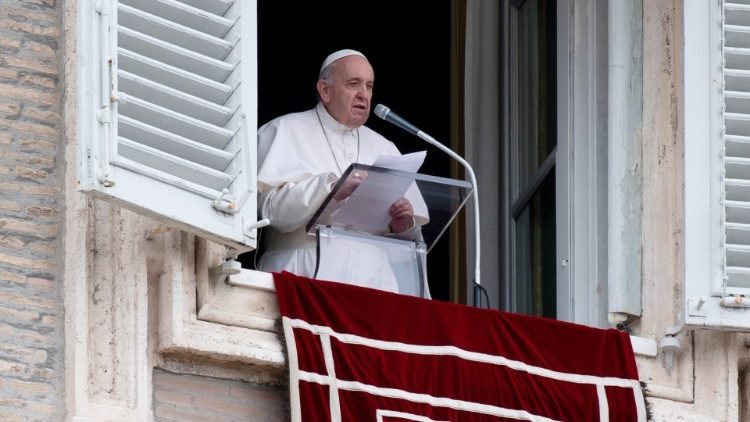
Indeed, if the God of heaven is close, we are not alone on earth, and even in difficulty we do not lose faith. Here is the first thing to say to people: God is not far away, but he is a Father. God is not distant, he is a Father, he knows you and he loves you; he wants to take you by the hand, even when you travel on steep and rugged paths, even when you fall and struggle to get up again and get back on track. He, the Lord, is there with you. Indeed, often in the moments when you are at your weakest, you can feel his presence all the more strongly. He knows the path, he is with you, he is your Father! He is my Father! He is our Father!
Let us remain with this image, because proclaiming God as close to us is inviting you to think like a child, who walks held by his father’s hand: everything seems different. The world, large and mysterious, becomes familiar and secure, because the child knows he is protected. He is not afraid, and learns how to open up: he meets other people, finds new friends, learns with joy things that he did not know, and then returns home and tells everyone what he has seen, while within him there grows the desire to become grown up and to do the things he has seen his daddy do. This is why Jesus starts out from here, this is why God’s vicinity is the first proclamation: by staying close to God, we conquer fear, we open ourselves to love, we grow in goodness and we feel the need and the joy to proclaim.
Pope Francis, Angelus, Saint Peter’s Square, Sunday, 21 June 2020
In this Sunday’s Gospel (cf. Mt 10:26-33) the invitation that Jesus addresses to His disciples resonates: to have no fear, to be strong and confident in the face of life’s challenges, as he forewarns them of the adversities that await them. Today’s passage is part of the missionary discourse, with which the Teacher prepares the Apostles for their first experience of proclaiming the Kingdom of God. Jesus persistently exhorts them to “have no fear”. Fear is one of the most terrible enemies of our Christian life. Jesus exhorts: “have no fear”, “fear not”. And Jesus describes three tangible situations that they will find themselves facing.
First and foremost the hostility of those who would like to stifle the Word of God, by sugar-coating it, watering it down, or by silencing those who proclaim it. In this case, Jesus encourages the Apostles to spread the message of salvation that He has entrusted to them. For the moment, He has transmitted it cautiously, somewhat covertly, among the small group of disciples. But they will utter his Gospel “in the light”, that is, openly; and will proclaim it “upon the housetops” — as Jesus says — that is, publicly.
The second difficulty that Christ’s missionaries will encounter is the physical threat against them, that is, direct persecution of them personally, to the point of being killed. […] Jesus advises these disciples of yesterday and today who suffer persecution: “do not fear those who kill the body but cannot kill the soul” (v. 28). We should not allow ourselves to be frightened by those who seek to extinguish evangelizing power with arrogance and violence. Indeed, they can do nothing against the soul, that is, against communion with God: no one can take this away from disciples, because it is a gift from God. The only fear that a disciple should have is that of losing this divine gift, closeness, friendship with God, giving up living according to the Gospel, thereby acquiring moral death, which is the effect of sin.
Jesus indicates as the third type of test that the Apostles will have to face, the sensation, which some may feel, that God himself has abandoned them, remaining distant and silent. Here too, Jesus exhorts them not to fear, because even while experiencing these and other pitfalls, the life of disciples lies firmly in the hands of God who loves us and looks after us.
[…]
May Mary Most Holy, model of trust and abandonment in God in the hour of adversity and danger, help us never to surrender to despair, but rather always to entrust ourselves to Him and to his grace, because God’s grace is ever more powerful than evil.